Best Surge Protector for Refrigerator & Appliances: An Electrician's Guide (2026)
Nobody calls an electrician because a surge killed their refrigerator. They call three weeks after the storm, when the ice maker stops answering and the display blinks a fault code that is not in the manual. The repair tech pulls the main control board, quotes $450, and mentions, almost as an aside, that boards have been dying all month in his service area.
That delay is what confuses people about appliance surges. A surge does not always kill the appliance on the spot. Sometimes it does. Just as often, it weakens a circuit board that fails days later, under the next heat wave or the next compressor start, and by then nobody connects it to the storm.
I have spent seven years maintaining power systems at critical facilities, where a dead control board means downtime, not an inconvenience. The pattern is identical in a home, just cheaper: the equipment that dies first is never the dumbest load in the building. It is always the one with a circuit board. This guide covers which appliances genuinely need surge protection, why a plug-in protector only covers half of them, and the exact specs to buy if you want to do this once and do it right.
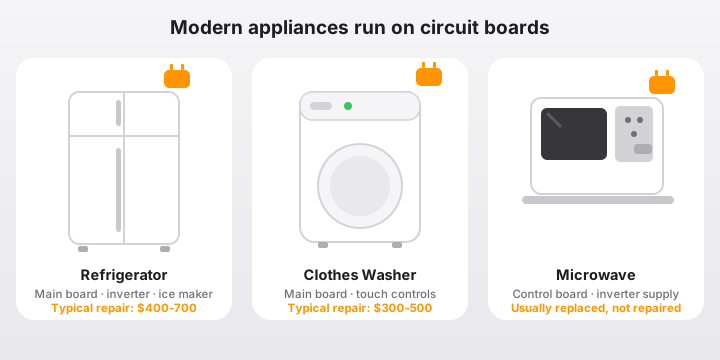
Modern Appliances Are Computers With Motors
Here is a list of things in an average home that contain a circuit board, and most people never think of any of them as electronics:
- Refrigerator and freezer (main control board, inverter drive on compressor models, dispenser and ice maker boards)
- Clothes washer and dryer (main boards, and touch controls on newer sets)
- Dishwasher (control board, and increasingly a GFCI requirement on its circuit)
- Microwave oven (control board, and an inverter power supply on mid-range and premium models)
- Sump pump (electronic float switches and controllers on many models)
- Furnace, heat pump, and water heater (blower and ignition boards, inverter compressors on heat pumps)
Thirty years ago, most of these were electromechanical: a timer, a relay, a thermostat. A voltage spike bounced off them. Today the same appliance routes its power through semiconductors that operate on a few volts internally, and a spike that would have annoyed a 1995 timer can destroy a 2026 control board.
The repair economics are ugly, and they are why appliance surge protection pays for itself the first time it works. These are typical 2026 service ranges, consistent with what I see quoted in the field:
| Appliance | Typical board failure repair | Typical replacement cost | Verdict |
|---|---|---|---|
| Refrigerator / freezer | $400-700 | $1,000-2,500 | Repair the board once, and you could have bought a lot of protection |
| Clothes washer | $300-500 | $600-1,400 | Board repair is usually the smart call on a newer machine |
| Dishwasher | $250-600 | $700-1,500 | Borderline; depends on the machine’s age |
| Microwave | Often not worth repairing | $100-400 | Cheap units get replaced, not repaired |
| Furnace / heat pump | $800-1,800 | $4,000-12,000 | The most expensive board in the house, and it is hardwired |
The board failures above are the same numbers I list in my whole-house surge protector cost breakdown, because the expensive victims of surges are never the TVs. A $45 plug-in protector or a $400 panel device is cheap insurance against a $700 refrigerator repair that most people will not expect to pay.
Where Appliance Surges Come From: Mostly Your Own House
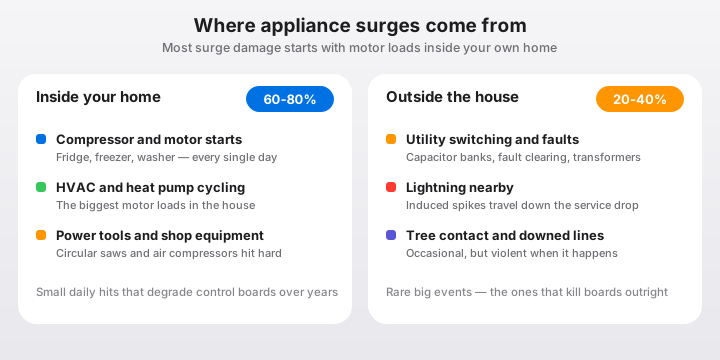
People picture surges as lightning. Lightning is real, but it is the minority of surge events that damage household appliances. Industry surveys consistently put the share of surges that originate inside the home at 60-80%.
Internal surges come from the appliances themselves. Every motor start sends a ripple back through the home’s wiring: the refrigerator compressor cycling on, the washer spinning up, the dryer tumbling, the furnace blower kicking in, a power tool in the garage. Each event is small, but a home with a dozen motor loads generates them daily, year after year. They are exactly the kind of repeated low-level stress that degrades a control board over time.
External surges are bigger but less frequent: utility switching (capacitor banks, fault clearing, a transformer switching on), a neighbor’s equipment failing, tree limbs touching lines, and lightning, both direct and induced.
| Surge source | Inside or outside | How often | What it does to appliances |
|---|---|---|---|
| Compressor and motor starts | Inside | Many times a day | Small ripples; cumulative stress on boards |
| Utility switching and faults | Outside | A few times a year | Medium hits; the classic killer of multiple boards at once |
| Lightning nearby | Outside | Rare | Large induced spikes; can kill boards and motors outright |
| Direct lightning strike | Outside | Very rare | Nothing plug-in survives; disconnect during severe storms if you can |
The outage connection matters too. When the power goes out and comes back, the restoration itself involves utility switching, and that is when the damaging spike often arrives. Equipment that “died when the power came back” was almost always killed by the surge that rode in with the restoration, not by the outage itself.
The Refrigerator: The Appliance That Earns Its Own Section
The refrigerator is different from every other appliance in the house for one reason: it is the only one that runs continuously, 24 hours a day, 365 days a year, packed with several hundred dollars of food. It also starts its compressor many times a day, which makes it both a victim and a generator of surges.
There are two compressor technologies in fridges, and they have different risk profiles:
- Single-speed compressors (older units, and budget models) start hard. For a fraction of a second at startup they can draw several times their running current. That is why a refrigerator should be on its own circuit and why you never share its outlet protector with a second appliance.
- Inverter compressors (most new refrigerators since the mid-2010s) ramp up softly instead of slamming on. Gentler starts, better efficiency, and less inrush current. But the inverter drive that makes that possible is a power-electronics board, and power electronics are exactly what surges eat. Newer fridges have more electronics to protect, not less.
A second refrigerator in the garage or basement gets the same protection conversation, plus two extra wrinkles: garage and unfinished-basement receptacles have required GFCI protection for years, and newer code cycles keep adding locations. If a refrigerator on a GFCI outlet trips repeatedly, that is a fault signal, not a reason to defeat the GFCI. Call an electrician.
The setup I recommend for a refrigerator: a single-outlet or two-outlet surge protector, rated 15A continuous, at least 2,000 joules, UL 1449 listed, plugged into the refrigerator’s dedicated wall outlet. Nothing else shares it. Do not run it on an extension cord. Leave enough slack that the fridge can be pulled out for cleaning, and do not coil the cord or trap it against the condenser coils, which get hot.
Microwave, Laundry, and the Rest: A Quick Tour
The rest of the appliance fleet breaks down into two groups: 120V cord-and-plug appliances you can protect at the outlet, and everything else, which only a panel-level protector can cover.
| Appliance | Electronics at risk | Plug-in protector possible? | Best protection |
|---|---|---|---|
| Microwave (countertop) | Control board, inverter supply | Yes | High-joule plug-in unit if it is a keeper; cheap units are throwaway |
| Clothes washer | Main board, touch controls | Yes | High-joule plug-in unit; washer circuits often need GFCI, which is normal |
| Sump pump | Electronic switch / controller | Sometimes (pump may be hardwired) | See the sump pump battery backup guide; protect its circuit at the panel |
| Electric dryer | Motor, control board | 240V only | Whole-house unit; 240V plug-in protectors exist but are a niche fix |
| Range / wall oven | Touch controls on premium models | 240V only | Whole-house unit |
| Dishwasher | Control board | Usually not (hardwired) | Whole-house unit only |
| Water heater | None on resistive models; heat-pump models have a compressor and inverter | No | Whole-house unit (heat-pump models especially) |
| Furnace / heat pump | The most expensive boards in the house | No (hardwired) | Whole-house unit, no debate |
Notice the pattern in the right-hand column. The appliances with the most expensive boards, furnace, heat pump, dishwasher, dryer, and range, cannot take a plug-in protector at all. That single fact drives the whole recommendation below.
The 240V Problem: Why Plug-In Protectors Cover Only Half Your Appliances
A standard plug-in surge protector is built for a 120V, 15A outlet. It cannot do anything for the 240V circuits that serve your dryer, electric range, water heater, or wall oven, and it cannot do anything for hardwired appliances like the dishwasher, furnace, or most sump pumps, because those have no outlet to plug into.
A niche category of plug-in protectors exists for 240V dryer and range outlets, and they work, but you are protecting one outlet at a time with a $50-90 device. Multiply that across a dryer, a range, a heat pump water heater, and a furnace, and you are spending more than a whole-house unit while leaving the hardwired loads still unprotected.
This is the argument for putting the protection where the appliances actually connect: at the electrical panel.
Whole-House First: The Strategy Appliances Actually Need
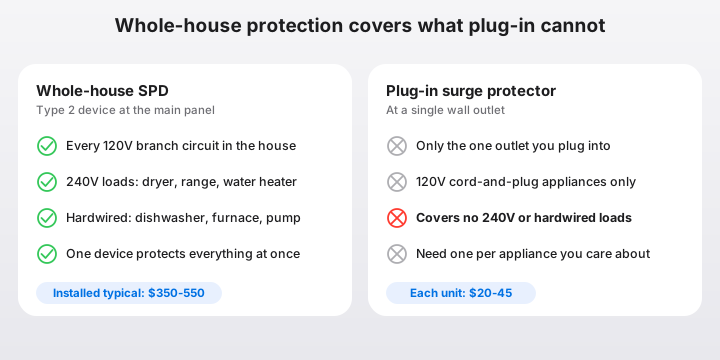
A Type 2 surge protective device installed at your main panel sits between the utility feed and every branch circuit in the house. One device protects the refrigerator on its dedicated circuit, the washer in the laundry room, the 240V dryer, the hardwired dishwasher, and the furnace, simultaneously. Nothing plug-in can make that claim.
Real 2026 numbers, matching my whole-house surge protector cost guide: the device itself runs $80-300, electrician labor runs $150-400, and total installed cost lands at $250-700, with most homes in the $350-550 range. The job takes a licensed electrician one to two hours.
Two things I insist on if you install one:
- Do not DIY the panel. The main panel stays live even with the main breaker off, because the utility side of the breaker is always energized. This is not a weekend project. The installation guide walks through what the electrician does and why.
- Buy for durability, not just protection. Ask for a surge current rating of at least 50kA, an indicator light you can check without opening the panel, and a unit with a connected-equipment warranty. Write the model number on the invoice so you can register it.
Whole-house is layer one. Layer two is a plug-in unit at the outlets where your most valuable cord-and-plug appliances live, the refrigerator and the washer. The panel unit absorbs the big external hits before they reach branch circuits; the plug-in units catch the remainder plus the surges generated inside the house by the appliances themselves.
If You Buy a Plug-In Unit: The Specs That Matter
Not every “surge protector” on the shelf is safe for appliance duty. A refrigerator and a washer draw real current for long stretches, unlike a phone charger, and cheap protectors are not built for it. Here is the checklist:
| Spec | Why it matters | What to look for |
|---|---|---|
| UL 1449 listing | Independent testing of surge handling and safety | Printed on the package or unit |
| Energy rating | How big a hit it can absorb before the MOVs give out | 2,000 joules minimum; 3,000+ for the fridge |
| Clamping voltage | How quickly it reacts | 330V or 400V; lower is better |
| Continuous current rating | Whether it can feed a motor load safely | 15A rated for refrigerator or washer duty |
| Outlet format | Refrigerator and washer need the outlet to themselves | Single-outlet or two-outlet with wide spacing |
| Protected indicator LED | Tells you when the MOVs are dead | Must be visible; check it after every storm |
| Thermal fuse | Fails safe instead of overheating | Present on quality units |
In terms of real products: an entry-level single-outlet surge protector rated for continuous load runs about $12-20 and is acceptable only as a second layer behind a whole-house unit. A heavy-duty appliance surge protector with 2,000+ joules and a visible indicator runs about $20-45 and is the sweet spot for a refrigerator or washer. If you have a 240V dryer and no panel unit yet, a 240V dryer outlet surge protector is a temporary stopgap, not a substitute for the whole-house device.
One rule that overrides all of this: if a surge protector has no joule rating and no protection light printed anywhere on it, it is not a surge protector. It is an outlet multiplier. The difference is explained in my surge protector vs power strip guide, and it matters more for appliances than for anything else, because a refrigerator draws current around the clock and an undersized strip behind a fridge is a heat problem waiting for a reason.
What Not to Do: Appliance Edition
- Do not put the fridge on an outlet multiplier. If the back label has no joule rating, it provides zero surge protection.
- Do not share the fridge protector with other loads. A microwave and a fridge on the same protector means the protector carries both, and the fridge’s compressor starts stress the shared circuit.
- Do not hide the protector behind the fridge. The cord gets pinched, heat builds up, and you will never see the indicator light go out.
- Do not use extension cords as the permanent solution. A refrigerator cord is meant to reach its outlet. If it does not, move the outlet, do not daisy-chain.
- Do not treat surge protection as a one-time purchase. MOVs degrade with every surge. Write the date on the unit and replace it every 3-5 years, or immediately after a known major surge event.
- Do not plug space heaters or window air conditioners into any surge protector. Those are continuous high-current loads, a 1,500W space heater draws 12.5A, and the sustained heat is exactly what protector internals are not built for. High-draw resistive heaters go directly into the wall and get their protection from the panel unit only.
What About a UPS for the Refrigerator?
A surge protector and a UPS are different tools, and the distinction matters for appliances. A surge protector clamps spikes but does nothing when the power is out. A UPS supplies battery power for a limited time, which is why the right tool depends on the problem: surges are handled by protection, outages are handled by backup.
Putting a refrigerator on a UPS is technically possible and practically awkward. The compressor’s starting draw demands a large inverter, runtime is measured in minutes to a couple of hours for a big unit, and you are paying UPS prices for something a small generator or a portable power station does better. If your sump pump is the appliance that worries you during outages, a purpose-built sump pump battery backup is the right answer. For food and comfort during multi-hour outages, work through the power outage preparation guide instead of trying to make a UPS do a generator’s job. The relationship between the two device families is covered in my surge protector vs UPS comparison.
The Bottom Line
Appliances are the most expensive surge victims in a typical home, and they are the ones people protect last. The fix is cheap relative to the risk:
- Install a Type 2 whole-house surge protector at the panel ($350-550 typical installed). It is the only protection that covers the 240V dryer, the hardwired dishwasher, the furnace, and the refrigerator’s dedicated circuit all at once. Have an electrician do it.
- Add a $20-45 plug-in unit at the refrigerator and washer as the second layer, rated 15A continuous with 2,000+ joules, UL 1449 listed, with a visible indicator.
- Write the date on every unit and replace on a 3-5 year schedule, and after any known major surge.
Do that and the next storm, or the next utility switching event, or the next time the compressor cycles on will be an event your appliances shrug off instead of a $450 repair bill three weeks later. That is the whole game: protect the boards, and the appliances take care of themselves.
Frequently Asked Questions
Can a power surge really damage a refrigerator?
Yes, and it is usually not the compressor that dies. A modern refrigerator is a sealed compressor plus one or more electronic boards: the main control board, the inverter drive on compressor models, and often a dispenser or ice maker board. Those boards are full of semiconductors, and semiconductors are exactly what voltage spikes kill. A direct or nearby lightning strike can also punch through compressor motor insulation, but that is rarer. The typical surge victim is the control board, and the typical outcome is a repair bill of roughly $400-700 on a fridge that otherwise works fine. Damage is not always instant either: a board can take a hit it survives, then fail days or weeks later under normal use.
Should I plug my refrigerator into a surge protector?
Yes, if you use the right kind. The refrigerator should be on its own circuit, and the protector should be a single-outlet or two-outlet unit rated for 15A continuous load with at least 2,000 joules and a UL 1449 listing. Do not plug a refrigerator into an ordinary power strip or a protector that also feeds a microwave, toaster, or coffee maker on the same circuit. If your home already has a whole-house surge protector at the panel, a plug-in unit at the fridge is an optional second layer rather than a requirement. Whatever you install, never hide it behind the fridge where the cord gets pinched and you cannot see the indicator light.
Whole-house or plug-in surge protector: which protects appliances better?
A whole-house unit protects more of your appliances, and for most homes it should come first. A plug-in surge protector only protects whatever is plugged into that one outlet, and it only works with 120V cord-and-plug appliances. Your dryer, electric range, water heater, and many dishwashers are 240V or hardwired, so no plug-in protector can cover them at all. A Type 2 whole-house surge protector installed at the main panel covers every circuit: the refrigerator, the washer, the 240V dryer, and hardwired appliances all at once. Typical installed cost is $250-700 (parts plus an electrician), and most homes land in the $350-550 range. The ideal setup is whole-house as layer one, plus a $20-45 plug-in unit at the refrigerator or washer as layer two.
What specs should I look for in an appliance surge protector?
Four things matter. First, a UL 1449 listing printed on the package or unit. Second, an energy rating of at least 2,000 joules; higher is better and costs only a few dollars more. Third, a low clamping voltage, ideally 330V or 400V, because lower clamping means the protector reacts sooner. Fourth, a continuous current rating of 15A, since a refrigerator and a washer are real loads, not phone chargers. Also look for a protected indicator LED, a thermal fuse so the unit fails safe instead of catching fire, and a short heavy cord. Mark the purchase date on the back and replace the unit every 3-5 years or immediately after a known major surge, because the metal-oxide varistors inside degrade with every surge they absorb.
Will a surge protector help during a power outage?
No. A surge protector clamps voltage spikes; it does not supply power. During an outage, keep the refrigerator and freezer doors closed: food typically stays safe about 4 hours in a fridge and 48 hours in a half-full freezer, longer if it is full. What you should know is that outages themselves are surge events waiting to happen: when the utility restores power, switching surges ride in with it, which is why equipment often dies at the moment the lights come back on. Surge protection matters most right after an outage. If outages are frequent in your area and you want the refrigerator to keep running through them, that requires battery or generator backup, not a surge protector.