Home Battery Installation Cost: A 2026 Electrician's Honest Breakdown
The first question everyone asks about a home battery is not whether it works — it is what it actually costs to get one on the wall. The honest answer is that the sticker price you see in a brochure is only about two-thirds of the real number. The rest is labor, permits, and the electrical work nobody mentions until the quote lands.
I install and service backup power for a living, and I have written quotes for enough of these to tell you exactly where the money goes. Here is the breakdown, with real numbers instead of ranges that span $15,000.
The Total Installed Cost: One Number First
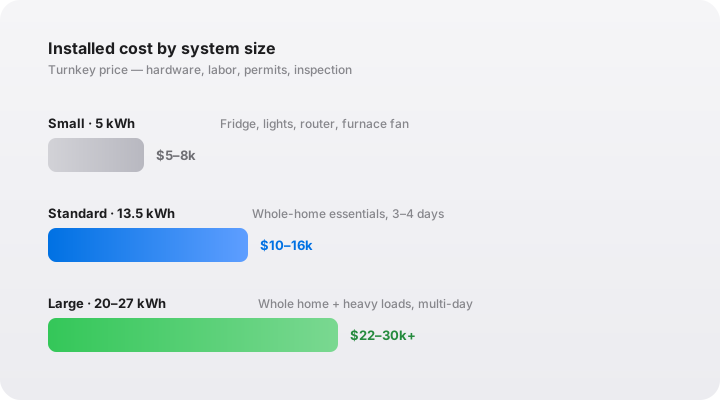
Here is the realistic picture as of mid-2026. These are total turnkey prices — hardware, labor, permits, and inspection — for a standard single-family home.
| System size | Typical installed cost | What it actually runs |
|---|---|---|
| Small (5 kWh, single unit) | $5,000 – 8,000 | A few circuits: fridge, lights, router, furnace fan |
| Standard (10–13.5 kWh, Powerwall-class) | $10,000 – 16,000 | Whole-home essentials for 3–4 days |
| Large (20–27 kWh, two units or a big stack) | $22,000 – 30,000+ | Whole home plus heavy loads, multi-day |
A 5 kWh unit is the Enphase IQ 5P class; a 13.5 kWh unit is the Tesla Powerwall 3 class. If you are still deciding how big a battery you need, start with my guide to how many batteries it takes to power a house before you commit to a size — buying too small and adding later is the most expensive mistake in this category.
Where the Money Actually Goes
The installed price is not “the battery plus a little bit.” For a typical single-unit install, here is the real split:
| Line item | Typical share | Real numbers |
|---|---|---|
| Battery hardware (cells, enclosure, BMS) | ~62% | $7,000 – 11,000 |
| Labor and electrical work | ~26% | $1,500 – 4,000 |
| Gateway / system controller | ~8% | $800 – 2,000 (sometimes bundled) |
| Permits and inspection | ~4% | $100 – 500 |
| Panel upgrades (if needed) | $0 – 5,000 | Only if your panel is old or full |
That last row is the one that turns a $12,000 project into a $17,000 one. More on it below, because it is the single most common reason a final invoice is higher than the sales pitch.
The Hardware: What You Are Actually Buying
The battery is not just a box of cells. A code-compliant install includes three hardware pieces:
- The battery itself — lithium iron phosphate (LiFePO4) chemistry in almost every modern unit, good for a 10–15 year warranty and thousands of cycles. This is the quiet, wall-mountable box.
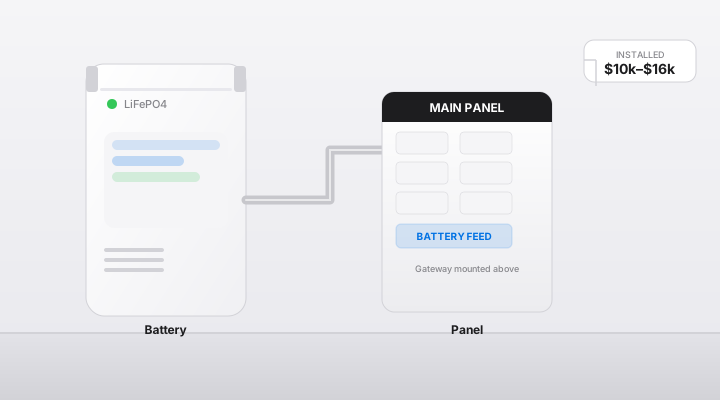
- The gateway or system controller — the device that senses a grid outage and isolates your house from the utility in under a second. Tesla uses a Gateway, Enphase a System Controller, FranklinWH builds it into the aPower unit. Without it, the battery is just an expensive paperweight that cannot legally back up your panel.
- An AC disconnect and breakers — a lockable switch and dedicated breaker slots so the system can be safely de-energized for service.
If you are shopping on the hardware itself, I wrote a full comparison of the leading options in my Tesla Powerwall alternatives guide. Do not pick a battery on price alone — pick the one whose controller and warranty fit your panel.
Labor: What the Electrician Actually Does
This is the part people underestimate. Installing a home battery is a half-day to two-day electrical job, not a plug-and-play afternoon. The electrician is doing all of this:
- Mounting the unit — either on a garage wall (studs must be found and reinforced) or on a concrete pad outdoors.
- Running conduit and wiring from the battery location to the main panel. This is usually the longest task, especially if the battery is on the opposite side of the house.
- Installing the gateway or controller at the panel, with its dedicated breakers.
- Wiring the AC disconnect and landing the feed on the correct breakers.
- Scheduling and walking through the inspection, and often the utility interconnection paperwork.
None of this is optional, and none of it is where you want a corner cut. A battery stores enough DC energy to kill you even after the grid is off, and an incorrectly bonded gateway can back-feed utility lines.
The Upgrades That Blow Up a Quote
Here is the honest list of what adds cost to a battery install, in rough order of how often I see them:
- Panel upgrade or sub-panel ($1,500 – 5,000). If your main panel is older, full, or 100A, the installer needs somewhere to land the gateway. This is the number one surprise.
- Distance from panel ($300 – 1,500). A battery on the far side of the house means 30–60 extra feet of conduit and heavier-gauge wire.
- Outdoor installation ($500 – 1,500). An exterior battery needs a concrete pad, weather-rated enclosure, and a longer wiring run. Some units are indoor-rated only.
- Structural reinforcement ($200 – 800). A 300-pound wall-mounted battery needs backing that will actually hold it.
- Utility interconnection fees ($0 – 500). Some utilities charge to process the agreement; others do not.
The single best money-saving move is to put the battery near the panel. A battery on the garage wall directly below the panel costs hundreds less to install than the same battery on the far side of the basement.
A Realistic Range by Scenario
To make this concrete, here are three real scenarios and what each one costs on the invoice:
| Scenario | System | Installed cost | Notes |
|---|---|---|---|
| Budget partial backup | 5 kWh single unit | $5,000 – 8,000 | Covers fridge, lights, router, and furnace fan; near-panel install, no panel upgrade |
| Standard whole-home | 13.5 kWh Powerwall-class | $10,000 – 16,000 | Essentials for 3–4 days; assumes a 200A panel with spare slots |
| Large, multi-day | 20–27 kWh (two units) | $22,000 – 30,000+ | Whole home plus heavy loads; often needs a sub-panel or panel upgrade |
Notice the standard scenario assumes your panel is ready. The moment a panel upgrade enters the picture, the standard scenario drifts toward the top of its range or beyond. This is why I tell people to have an electrician look at the panel before they buy the battery, not after.
Permits and the Interconnection Timeline
A permitted battery install typically takes one to three weeks from signed contract to energized system, and the longest single step is usually the utility, not the electrician. Expect:
- Permit filing and approval: a few days.
- Installation: one to two days on site.
- Inspection: usually same week.
- Utility permission to operate (PTO): days to a few weeks, depending on your utility.
You do not flip a switch and walk away. The system is commissioned and tested by the installer, and your utility has to sign off before the battery may export or island your home. If your primary goal is storm backup rather than solar self-consumption, read my guide to home battery backup without solar — it changes which battery features actually matter to you.
How to Keep the Cost Down
Four things actually move the needle:
- Install near the panel. This is the easiest hundreds of dollars you will save.
- Choose a size that fits your existing panel. If you do not need whole-home backup, a 5–10 kWh unit often needs no panel upgrade at all.
- Bundle the electrical work. If you are also adding a whole-house surge protector or a generator inlet, doing it in the same visit shares the labor and the permit.
- Check for incentives. Many utilities and states still run battery rebates or demand-response programs that knock thousands off the final price. Ask the installer, not the brochure.
The Bottom Line
A home battery install costs $10,000 to $16,000 for a standard Powerwall-class unit, of which the battery itself is only about two-thirds. The rest is labor, permits, and — too often — a panel upgrade that was never mentioned in the sales pitch. Plan for the electrical work up front, put the battery near the panel, and get the panel inspected before you buy. Do those three things and the final invoice will look a lot like the quote — which is rarer in this industry than it should be.
If you are still deciding between a battery and a generator, the decision turns on how your house actually fails. I lay out the whole trade-off in my home battery vs. generator comparison.
Frequently Asked Questions
How much does it cost to install a home battery in 2026?
A typical single-unit system runs $10,000 to $16,000 installed for a 13.5 kWh Powerwall-class unit. The total splits into three line items: the battery hardware (roughly 60-70% of the bill), electrician labor and mounting (roughly 25-30%), and permits, inspection, and any panel work (the rest). A small 5 kWh system can land around $5,000-8,000, while a large 20-27 kWh multi-battery setup runs $22,000-30,000 or more.
Can I install a home battery myself?
No. A grid-tied battery stores DC voltage high enough to kill you (typically 200-600V internally), and connecting it to your panel requires a licensed electrician, a building permit, and in most areas a utility interconnection agreement. Working on the panel or battery without these voids the warranty and your homeowners insurance, and an incorrectly wired gateway can back-feed the grid and injure a line worker. This is the one job where watching a video genuinely does not cut it.
Will I need an electrical panel upgrade to install a home battery?
Sometimes. If your panel is older, full, or only 100A, the installer may need to add a sub-panel or replace the main panel, which adds $1,500 to $5,000 to the quote. The battery gateway or system controller needs dedicated breaker slots, and a panel that is already maxed out cannot legally accept them. A 200A panel with two spare slots usually needs no upgrade at all. Have this checked before you buy so it does not surprise you mid-project.
How much of the cost is labor vs. the battery itself?
For a single Powerwall-class install, hardware is roughly $7,000-11,000 and labor, permits, and electrical work are roughly $3,000-5,000. Labor covers mounting the unit, running conduit and wiring to the panel, installing the gateway or controller plus a lockable AC disconnect, and the final inspection. The biggest labor variable is distance: a battery on the opposite side of the house from the panel means more conduit and more hours.
Is a home battery worth the install cost compared to a generator?
Usually yes if your outages are short and infrequent, and no if they are multi-day or rural. A battery is silent, maintenance-free, and switches over in under a second, but it runs out in hours to days. A generator runs indefinitely on fuel but wants annual maintenance and an outdoor exhaust-safe location. I break the decision down in detail in my home battery vs. generator comparison.